
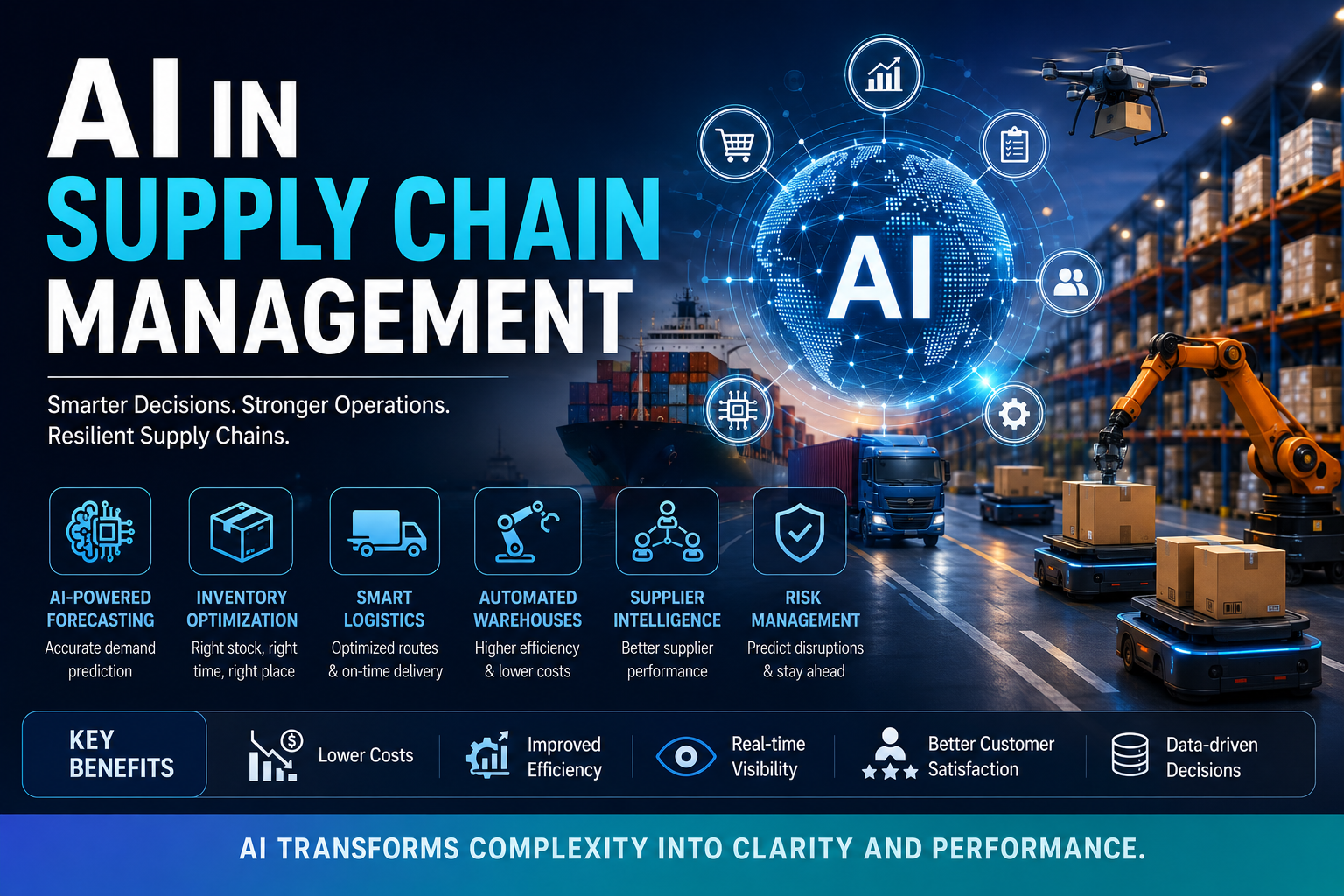
The modern supply chain has become significantly more complex than it was just a decade ago. Global sourcing, fluctuating consumer demand, geopolitical uncertainty, labor shortages, and rising transportation costs have created new challenges for manufacturers, retailers, distributors, and logistics providers. Traditional supply chain management methods are no longer sufficient to keep pace with today’s rapidly changing business environment.
Artificial Intelligence (AI) is helping organizations overcome these challenges by introducing smarter, faster, and more data-driven decision-making. Rather than relying solely on historical reports or manual planning, businesses can now use AI to analyze millions of data points in real time, predict future demand, optimize inventory, improve supplier relationships, and automate repetitive operational tasks. These capabilities enable companies to build more resilient, efficient, and responsive supply chains.
The adoption of AI is accelerating across industries because it delivers measurable business value. Companies that implement AI-powered supply chain solutions often experience better forecasting accuracy, lower inventory costs, faster delivery times, improved customer satisfaction, and greater operational visibility. As AI technologies continue to evolve, they are becoming a critical competitive advantage rather than an optional innovation.
In this comprehensive guide, we’ll explore how AI is transforming supply chain management in 2026, the key benefits it offers, practical use cases across different industries, common implementation challenges, and the emerging trends shaping the future of intelligent supply chains.
What Is AI in Supply Chain Management?
AI in Supply Chain Management refers to the use of artificial intelligence technologies—including machine learning, predictive analytics, natural language processing, computer vision, and intelligent automation—to improve planning, execution, and decision-making throughout the supply chain. Instead of depending on static reports and manual analysis, AI continuously processes operational data to identify patterns, predict disruptions, and recommend actions that improve overall performance.
Modern AI systems connect information from multiple sources such as enterprise resource planning (ERP) software, warehouse management systems, transportation platforms, IoT sensors, supplier databases, and customer orders. By analyzing this information together, AI creates a real-time view of the supply chain, allowing businesses to respond quickly to changing market conditions.
Unlike traditional automation, which follows predefined rules, AI learns from historical and real-time data. As more information becomes available, the system continuously improves its predictions and recommendations, making supply chain operations more intelligent over time.
Why AI Is Reshaping Global Supply Chains
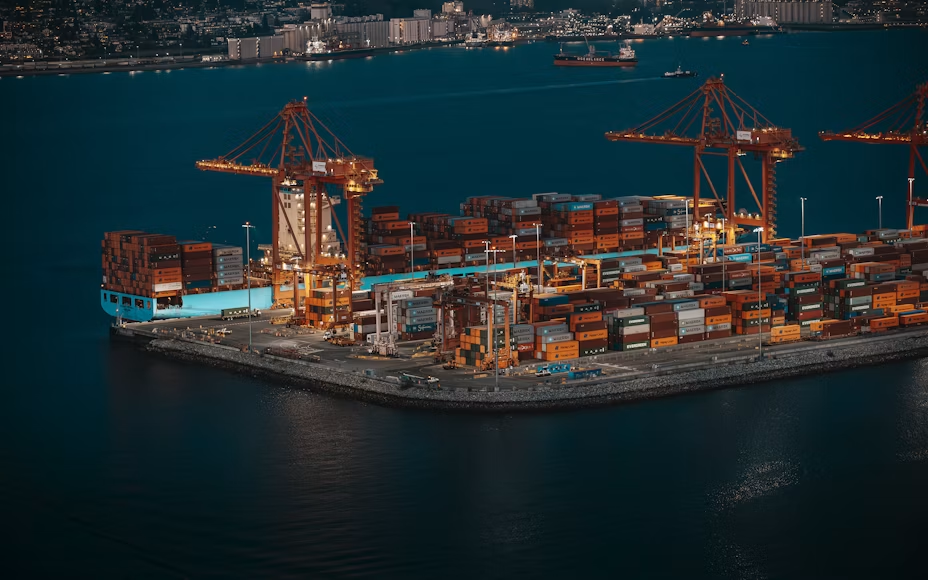
Global supply chains have become increasingly interconnected, making them more vulnerable to disruptions. Unexpected events such as natural disasters, political conflicts, supplier shortages, transportation delays, and sudden changes in customer demand can significantly impact business operations.
Artificial intelligence helps organizations prepare for these uncertainties by improving visibility across the entire supply chain. Instead of reacting after problems occur, AI identifies potential risks early and recommends preventive actions before disruptions affect customers or production schedules.
Another reason AI has become essential is the enormous volume of supply chain data generated every day. Inventory transactions, shipping updates, production schedules, customer orders, supplier communications, and market trends create more information than human teams can analyze manually. AI processes this data within seconds, delivering insights that enable faster and more informed decision-making.
As organizations prioritize resilience alongside efficiency, AI has emerged as one of the most valuable technologies for modern supply chain management.
Key Benefits of AI in Supply Chain Management
Artificial intelligence offers advantages that extend well beyond automation. It helps organizations make smarter decisions, reduce operational costs, improve customer service, and strengthen long-term business resilience.
Some of the most significant benefits include:
- Improved demand forecasting
- Smarter inventory optimization
- Reduced operational costs
- Faster procurement decisions
- Better supplier management
- Predictive maintenance
- Enhanced logistics planning
- Real-time supply chain visibility
- Improved warehouse efficiency
- Stronger risk management
Together, these benefits enable businesses to create supply chains that are more agile, responsive, and capable of adapting to changing market conditions.
AI-Powered Demand Forecasting
Accurate demand forecasting is one of the most important functions within supply chain management. Poor forecasts often lead to excess inventory, stock shortages, increased storage costs, and dissatisfied customers. Traditional forecasting methods primarily rely on historical sales data, which may not accurately reflect changing market conditions.
AI significantly improves forecasting by analyzing a much broader range of variables. In addition to historical sales, AI models evaluate seasonal trends, promotional campaigns, weather conditions, economic indicators, consumer behavior, social media sentiment, and external market events. This allows businesses to generate more accurate demand predictions and adjust production or purchasing plans proactively.
As forecasting accuracy improves, companies can maintain optimal inventory levels, reduce waste, and improve customer satisfaction by ensuring products are available when needed.
Benefits of AI Demand Forecasting
- Better sales predictions
- Lower inventory carrying costs
- Reduced stockouts
- Improved production planning
- Enhanced customer satisfaction
- Faster response to market changes
AI for Inventory Optimization
Inventory management has always been one of the most challenging aspects of supply chain operations. Holding too much inventory ties up working capital and increases storage costs, while insufficient inventory can result in lost sales and production delays.
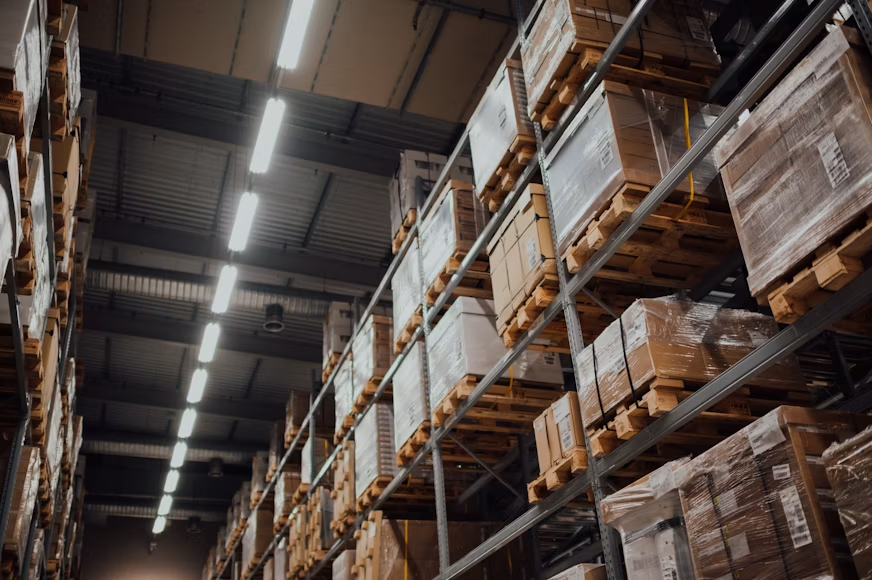
Artificial intelligence continuously monitors inventory across warehouses, production facilities, and distribution centers. By analyzing purchasing trends, supplier lead times, production schedules, and customer demand, AI recommends optimal inventory levels for each product.
Rather than relying on fixed reorder points, intelligent inventory systems automatically adjust replenishment strategies as business conditions change. This dynamic approach reduces excess inventory while ensuring critical products remain available during periods of increased demand.
Companies also benefit from improved warehouse utilization because inventory is distributed more efficiently across multiple locations based on predicted demand patterns.
Advantages of AI Inventory Management
- Reduced overstock
- Lower storage costs
- Improved inventory turnover
- Automatic replenishment recommendations
- Better warehouse utilization
- Higher order fulfillment rates
AI in Procurement and Supplier Management
Procurement has evolved beyond simply purchasing materials at the lowest possible cost. Modern supply chains require organizations to evaluate supplier reliability, delivery performance, quality standards, sustainability practices, and financial stability before making purchasing decisions.
Artificial intelligence helps procurement teams analyze supplier performance using historical purchasing data, contract information, delivery records, and external risk indicators. AI can identify suppliers that consistently meet quality expectations while highlighting those that may pose future risks due to delayed shipments or declining performance.
AI also assists with contract analysis by reviewing large volumes of procurement documents, identifying pricing trends, renewal opportunities, and potential compliance issues. This reduces manual administrative work while helping procurement professionals negotiate better agreements.
By continuously monitoring supplier performance, businesses become more resilient and better prepared to respond when disruptions occur within their supply networks.
How AI Improves Procurement
- Supplier performance evaluation
- Automated purchase recommendations
- Contract analysis
- Risk monitoring
- Cost optimization
- Smarter sourcing decisions
Building a More Resilient Supply Chain with AI
One of AI’s greatest strengths is its ability to improve resilience. Instead of focusing solely on operational efficiency, modern AI platforms help businesses anticipate disruptions before they occur. Predictive analytics identify risks across suppliers, transportation networks, inventory levels, and production schedules, allowing organizations to develop contingency plans well in advance.
For example, if AI detects an increased probability of supplier delays due to weather conditions or geopolitical events, procurement teams can source materials from alternative suppliers before production is affected. Similarly, logistics managers can reroute shipments to avoid transportation bottlenecks, minimizing delivery disruptions and maintaining customer satisfaction.
This proactive approach transforms supply chains from reactive systems into intelligent networks capable of adapting to uncertainty with greater speed and confidence.
AI Applications Across the Supply Chain
AI in Manufacturing Operations
Manufacturing is one of the industries experiencing the greatest impact from artificial intelligence. Modern production facilities generate enormous amounts of data from machines, sensors, production lines, and quality inspections. AI transforms this data into actionable insights that help manufacturers increase productivity, reduce waste, and improve operational efficiency.
Instead of reacting to production issues after they occur, AI continuously monitors manufacturing processes and identifies early signs of inefficiencies. It can recommend adjustments to machine settings, optimize production schedules, and balance workloads across different production lines. This enables manufacturers to maintain consistent output while minimizing downtime and material waste.
AI also improves production planning by aligning manufacturing capacity with real-time customer demand. When combined with ERP and supply chain systems, businesses can synchronize procurement, production, and distribution, creating a more responsive manufacturing environment.
Key Benefits
- Smarter production scheduling
- Reduced manufacturing waste
- Better resource utilization
- Increased production efficiency
- Faster operational decision-making
- Improved coordination between departments
AI-Powered Logistics and Transportation
Transportation plays a critical role in supply chain performance, and even small delays can have significant financial consequences. AI helps logistics companies optimize delivery routes, reduce transportation costs, improve fleet utilization, and enhance delivery accuracy.
Traditional route planning often depends on fixed schedules or historical data. AI, however, analyzes live traffic conditions, weather forecasts, fuel prices, road closures, driver availability, and customer delivery priorities to recommend the most efficient routes. This dynamic optimization reduces fuel consumption, shortens delivery times, and improves customer satisfaction.
Another important application is predictive shipment monitoring. AI continuously tracks shipments in transit and alerts logistics managers when delays are likely to occur. This allows businesses to communicate proactively with customers and implement alternative delivery strategies before disruptions escalate.
Benefits of AI in Logistics
- Faster deliveries
- Lower transportation costs
- Optimized delivery routes
- Better fleet management
- Improved shipment visibility
- Enhanced customer communication
Warehouse Automation with AI
Warehouses have evolved from simple storage facilities into highly intelligent distribution centers. Artificial intelligence enables businesses to automate warehouse operations, improve inventory accuracy, and increase order fulfillment speed while reducing manual labor requirements.
AI-powered warehouse management systems analyze order patterns, inventory movement, and storage utilization to determine the most efficient product placement. Frequently ordered items can be positioned closer to packing stations, reducing travel time for warehouse staff and accelerating order processing.
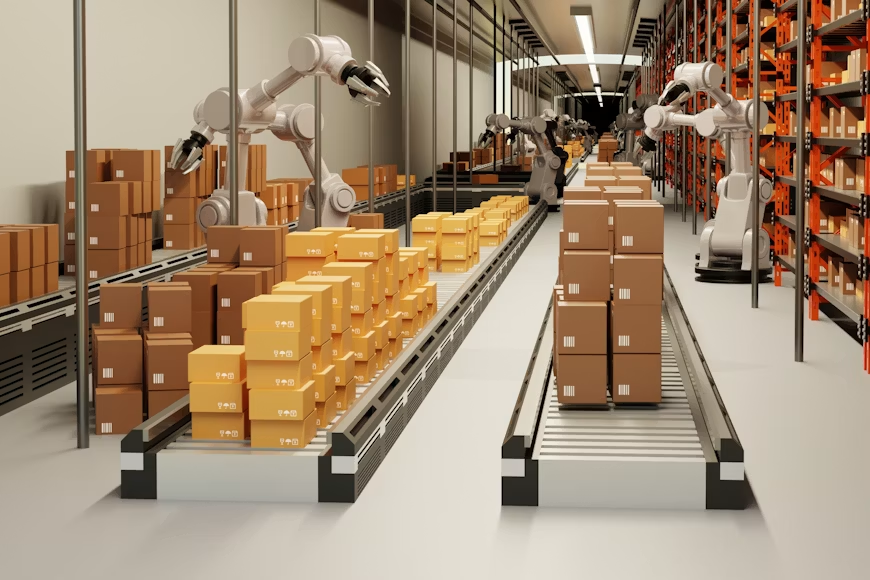
Many warehouses also combine AI with robotics and computer vision technologies. Automated robots transport inventory, while AI-powered cameras verify product accuracy during picking and packing. These technologies reduce human errors and improve operational efficiency without compromising quality.
Advantages of AI Warehouse Management
- Faster order fulfillment
- Improved inventory accuracy
- Reduced labor costs
- Optimized storage utilization
- Better warehouse productivity
- Lower picking and packing errors
Predictive Maintenance
Unexpected equipment failures can disrupt production schedules, delay shipments, and increase operating costs. Traditional maintenance schedules often rely on fixed service intervals, which may result in unnecessary maintenance or unexpected breakdowns.
Predictive maintenance uses artificial intelligence to monitor machinery continuously through sensors that collect information such as temperature, vibration, pressure, and energy consumption. AI analyzes this data to detect patterns that indicate potential equipment failures before they occur.
Maintenance teams receive early warnings, allowing repairs to be scheduled during planned downtime rather than after costly breakdowns. This approach extends equipment lifespan, reduces repair expenses, and minimizes production interruptions.
Benefits of Predictive Maintenance
- Reduced equipment downtime
- Lower maintenance costs
- Longer machine lifespan
- Improved production reliability
- Better maintenance scheduling
- Increased workplace safety
AI for Quality Control
Maintaining consistent product quality is essential for manufacturers operating in competitive markets. Traditional quality inspections often depend on manual visual checks, which can be time-consuming and susceptible to human error.
Artificial intelligence improves quality control by combining machine learning with computer vision systems. High-resolution cameras inspect products during production, while AI algorithms identify defects, inconsistencies, and manufacturing deviations with remarkable speed and accuracy.
Beyond detecting defects, AI also analyzes production data to determine the root causes of quality issues. Manufacturers can adjust equipment settings, improve production processes, and reduce defect rates before large batches of products are affected.
How AI Improves Quality Assurance
- Automated visual inspections
- Early defect detection
- Reduced product recalls
- Improved production consistency
- Lower quality control costs
- Enhanced customer satisfaction
Real-World Applications of AI in Supply Chains
Artificial intelligence is no longer limited to experimental projects or large technology companies. Organizations across multiple industries are already using AI to improve operational performance and strengthen supply chain resilience.
Retail businesses use AI to forecast seasonal demand, optimize inventory levels, and personalize product recommendations. Manufacturing companies rely on predictive maintenance, production planning, and quality control systems to improve efficiency. Logistics providers employ AI to optimize transportation routes, monitor shipments, and reduce delivery times.
Healthcare organizations leverage AI to manage medical inventory, forecast pharmaceutical demand, and improve distribution of critical supplies. Food and beverage companies use AI to monitor product freshness, reduce waste, and improve traceability across the supply chain.
These examples demonstrate how AI creates measurable business value across industries with very different operational requirements.
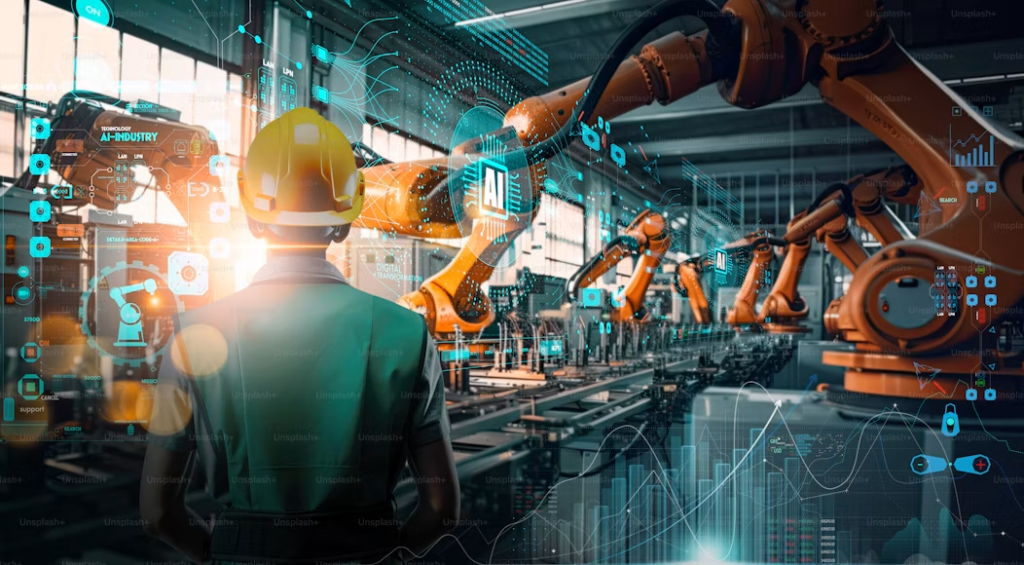
Industries Benefiting from AI in Supply Chain Management
Although nearly every industry can benefit from AI, some sectors have experienced particularly significant improvements due to the complexity of their supply chains.
Manufacturing
Manufacturers use AI for production planning, predictive maintenance, inventory optimization, quality assurance, and demand forecasting. These capabilities improve operational efficiency while reducing production costs.
Retail and eCommerce
Retailers apply AI to forecast customer demand, optimize warehouse inventory, automate replenishment, and improve last-mile delivery. This results in better product availability and enhanced customer experiences.
Healthcare
Hospitals and pharmaceutical companies depend on AI to manage medical supplies, optimize procurement, forecast medication demand, and ensure regulatory compliance throughout the supply chain.
Automotive
Automotive manufacturers use AI to coordinate thousands of suppliers, monitor production schedules, optimize inventory, and improve quality control across global manufacturing networks.
Food and Beverage
Food producers leverage AI to monitor inventory freshness, predict consumer demand, reduce spoilage, and improve traceability throughout production and distribution.
Logistics and Transportation
Logistics providers utilize AI for route optimization, fleet management, predictive maintenance, shipment tracking, and warehouse automation to improve delivery performance while reducing operating costs.
How AI Enhances Supply Chain Decision-Making
One of AI’s greatest advantages is its ability to support faster and more informed decision-making. Supply chain managers often need to evaluate large volumes of operational data before making purchasing, production, or logistics decisions. AI simplifies this process by identifying patterns and presenting actionable recommendations in real time.
Instead of spending hours analyzing spreadsheets and reports, decision-makers receive intelligent insights through dashboards that highlight emerging risks, inventory shortages, supplier performance issues, and changing customer demand. This enables businesses to respond proactively rather than reacting after problems occur.
As AI systems continue learning from operational data, their recommendations become increasingly accurate, allowing organizations to improve both short-term efficiency and long-term strategic planning.
Business Benefits of AI-Driven Supply Chains
Organizations investing in AI often achieve improvements across multiple performance indicators rather than a single operational area. Because AI connects manufacturing, procurement, logistics, inventory, and customer demand into one intelligent ecosystem, optimization in one department frequently benefits the entire supply chain.
Common business outcomes include:
- Lower operating costs
- Improved forecasting accuracy
- Faster order fulfillment
- Reduced inventory waste
- Better supplier relationships
- Increased customer satisfaction
- Enhanced operational visibility
- Higher profitability
- Stronger supply chain resilience
- Improved competitive advantage
These benefits explain why AI adoption continues to accelerate across both global enterprises and small-to-medium-sized businesses.
Challenges, Best Practices, AI Tools, Future Trends & Final Verdict
Challenges of Implementing AI in Supply Chain Management
Although artificial intelligence delivers significant operational benefits, implementing it successfully requires careful planning and long-term commitment. Many organizations expect immediate results after deploying AI solutions, but the reality is that success depends on high-quality data, well-defined processes, skilled teams, and strong leadership support.
One of the biggest challenges is poor data quality. AI systems rely on accurate and consistent information to generate reliable insights. If inventory records, supplier information, production data, or customer demand forecasts are incomplete or outdated, the recommendations produced by AI may be inaccurate. Before investing in AI, businesses should focus on improving data governance and integrating information across different systems.
Another common obstacle is integrating AI with existing business software. Many organizations still operate legacy ERP, warehouse management, and procurement systems that were not designed to support modern AI technologies. Connecting these platforms often requires technical expertise, additional investment, and careful planning to ensure seamless data flow across departments.
Employee adoption can also present challenges. Introducing AI changes the way teams work, and some employees may be hesitant to trust automated recommendations or fear that technology will replace their roles. Successful businesses address these concerns through training, clear communication, and positioning AI as a tool that supports employees rather than replacing them.
Common AI Implementation Challenges
- Poor data quality
- Legacy software integration
- High implementation costs
- Employee resistance
- Cybersecurity concerns
- Limited AI expertise
- Data privacy regulations
- Measuring return on investment
How to Successfully Implement AI in Supply Chain Management
Implementing AI should be viewed as a continuous transformation rather than a one-time technology project. Organizations that achieve the best results usually begin with small, clearly defined initiatives before expanding AI across the entire supply chain.
The first step is identifying the business problem AI should solve. Whether the goal is improving demand forecasting, reducing inventory costs, optimizing transportation routes, or increasing warehouse efficiency, having measurable objectives helps guide implementation and evaluate success.
Once priorities have been established, businesses should assess their existing data infrastructure. Clean, accurate, and centralized data provides the foundation for effective AI models. Investing in modern ERP systems, cloud platforms, and integrated databases often improves AI performance significantly.
Companies should also begin with pilot projects that demonstrate measurable value before rolling out AI across multiple departments. Early successes help build internal confidence, encourage employee adoption, and provide valuable lessons for future implementations.
Steps for Successful AI Adoption
- Define clear business objectives.
- Improve data quality.
- Integrate existing business systems.
- Start with a pilot project.
- Train employees.
- Measure key performance indicators.
- Continuously optimize AI models.
Best Practices for AI-Powered Supply Chains
Artificial intelligence produces the best outcomes when combined with sound operational strategies and experienced supply chain professionals. Rather than relying entirely on automation, businesses should use AI to enhance decision-making while maintaining appropriate human oversight.
Regular monitoring is essential. Market conditions, customer behavior, supplier performance, and transportation networks constantly evolve. AI models should be reviewed and updated to ensure recommendations remain accurate as new data becomes available.
Organizations should also prioritize collaboration across departments. Procurement, manufacturing, logistics, finance, and sales teams all contribute valuable data that improves AI decision-making. Sharing information across these functions creates a more connected and resilient supply chain.
Best Practices
- Establish strong data governance.
- Continuously monitor AI performance.
- Combine AI insights with human expertise.
- Encourage cross-functional collaboration.
- Update predictive models regularly.
- Monitor supplier risks proactively.
- Invest in employee training.
- Prioritize cybersecurity and compliance.

A growing number of software providers now offer AI-powered supply chain solutions that help businesses improve forecasting, procurement, manufacturing, logistics, and inventory management. While each platform focuses on different operational areas, they all leverage artificial intelligence to enhance decision-making and increase efficiency.
1. SAP Integrated Business Planning (SAP IBP)
SAP IBP combines AI, machine learning, and advanced analytics to improve demand forecasting, inventory optimization, sales planning, and supply chain collaboration. It is particularly well suited for large enterprises managing complex global operations.
2. Oracle Fusion Cloud Supply Chain
Oracle’s AI-powered supply chain platform helps businesses automate procurement, demand planning, manufacturing, logistics, and warehouse management while providing real-time operational visibility.
3. Microsoft Dynamics 365 Supply Chain Management
Microsoft integrates AI into its supply chain platform through predictive maintenance, intelligent inventory optimization, warehouse automation, and production planning. Businesses already using Microsoft technologies often benefit from seamless integration.
4. Blue Yonder
Blue Yonder specializes in AI-driven demand forecasting, transportation management, warehouse optimization, and inventory planning. Its predictive capabilities help organizations anticipate disruptions and improve operational resilience.
5. Kinaxis RapidResponse
Kinaxis enables organizations to perform scenario planning, supply chain simulations, and demand forecasting using AI-powered analytics. The platform is widely used by manufacturers operating highly dynamic global supply chains.
6. o9 Solutions
o9 Solutions combines artificial intelligence, digital twins, and integrated business planning to support forecasting, production planning, procurement, and financial decision-making across complex supply networks.
Comparison Table: Leading AI Supply Chain Platforms
| Platform | Best For | AI Forecasting | Inventory Optimization | Manufacturing | Logistics |
|---|---|---|---|---|---|
| SAP IBP | Large Enterprises | ⭐⭐⭐⭐⭐ | ⭐⭐⭐⭐⭐ | ⭐⭐⭐⭐☆ | ⭐⭐⭐⭐☆ |
| Oracle Fusion Cloud SCM | Enterprise Supply Chains | ⭐⭐⭐⭐⭐ | ⭐⭐⭐⭐⭐ | ⭐⭐⭐⭐⭐ | ⭐⭐⭐⭐☆ |
| Microsoft Dynamics 365 SCM | Mid-Market Businesses | ⭐⭐⭐⭐☆ | ⭐⭐⭐⭐☆ | ⭐⭐⭐⭐⭐ | ⭐⭐⭐⭐☆ |
| Blue Yonder | Retail & Logistics | ⭐⭐⭐⭐⭐ | ⭐⭐⭐⭐⭐ | ⭐⭐⭐☆☆ | ⭐⭐⭐⭐⭐ |
| Kinaxis RapidResponse | Global Manufacturers | ⭐⭐⭐⭐⭐ | ⭐⭐⭐⭐☆ | ⭐⭐⭐⭐⭐ | ⭐⭐⭐⭐☆ |
| o9 Solutions | Enterprise Planning | ⭐⭐⭐⭐⭐ | ⭐⭐⭐⭐⭐ | ⭐⭐⭐⭐☆ | ⭐⭐⭐⭐☆ |
Future Trends in AI Supply Chain Management
Artificial intelligence continues to evolve rapidly, and its influence on supply chain management will only increase over the coming years. Organizations are moving beyond basic automation toward intelligent ecosystems capable of predicting disruptions, simulating business scenarios, and making autonomous operational decisions.
One emerging trend is the adoption of digital twins—virtual replicas of physical supply chains that allow businesses to simulate changes before implementing them in the real world. Combined with AI, digital twins enable organizations to test inventory strategies, supplier changes, and transportation plans while minimizing operational risk.
Generative AI is also beginning to reshape supply chain operations. Beyond analyzing data, it can generate procurement reports, summarize supplier contracts, draft operational procedures, and provide conversational insights for managers through AI assistants.
Other important trends include autonomous warehouses, AI-powered procurement negotiations, sustainability optimization, and greater integration between IoT devices and predictive analytics. These innovations will make supply chains more agile, transparent, and resilient in the years ahead.
Frequently Asked Questions
What is AI in supply chain management?
AI in supply chain management refers to the use of artificial intelligence technologies such as machine learning, predictive analytics, computer vision, and automation to improve planning, inventory management, logistics, procurement, manufacturing, and decision-making across the supply chain.
What are the main benefits of AI in supply chains?
Some of the biggest benefits include improved demand forecasting, optimized inventory levels, lower operational costs, enhanced supplier management, predictive maintenance, warehouse automation, and better customer service.
Which industries benefit most from AI-powered supply chains?
Manufacturing, retail, eCommerce, healthcare, automotive, food and beverage, consumer goods, and logistics are among the industries experiencing the greatest advantages from AI adoption.
Can small businesses use AI in supply chain management?
Yes. Cloud-based AI platforms have made advanced supply chain technologies more accessible for small and medium-sized businesses. Many solutions offer scalable pricing, allowing organizations to start with specific functions such as inventory optimization or demand forecasting before expanding further.
Will AI replace supply chain professionals?
No. AI is designed to support decision-making rather than replace experienced professionals. Human expertise remains essential for strategic planning, supplier negotiations, risk management, and responding to unexpected business situations.
Final Verdict
Artificial intelligence is fundamentally transforming the way supply chains operate. From forecasting customer demand and optimizing inventory to improving logistics, warehouse operations, manufacturing, and procurement, AI enables organizations to make faster, more accurate, and data-driven decisions across every stage of the supply chain.
Businesses that embrace AI are better equipped to respond to market disruptions, reduce operational costs, improve efficiency, and deliver superior customer experiences. As cloud computing, machine learning, IoT, and generative AI continue to advance, intelligent supply chains will become the standard rather than the exception.
The journey toward AI adoption does not require replacing existing systems overnight. Organizations can begin with targeted initiatives such as demand forecasting, predictive maintenance, or inventory optimization, gradually expanding AI capabilities as they gain experience and measurable results.
Companies that invest in AI-powered supply chain strategies today will be better positioned to build resilient, agile, and future-ready operations capable of competing in an increasingly complex global marketplace.